
Hollywood 2.0 Why the Creator Economy Belongs in Hollywood
By Joel Mendoza · Commercial Real Estate Advisor · Hollywood Submarket
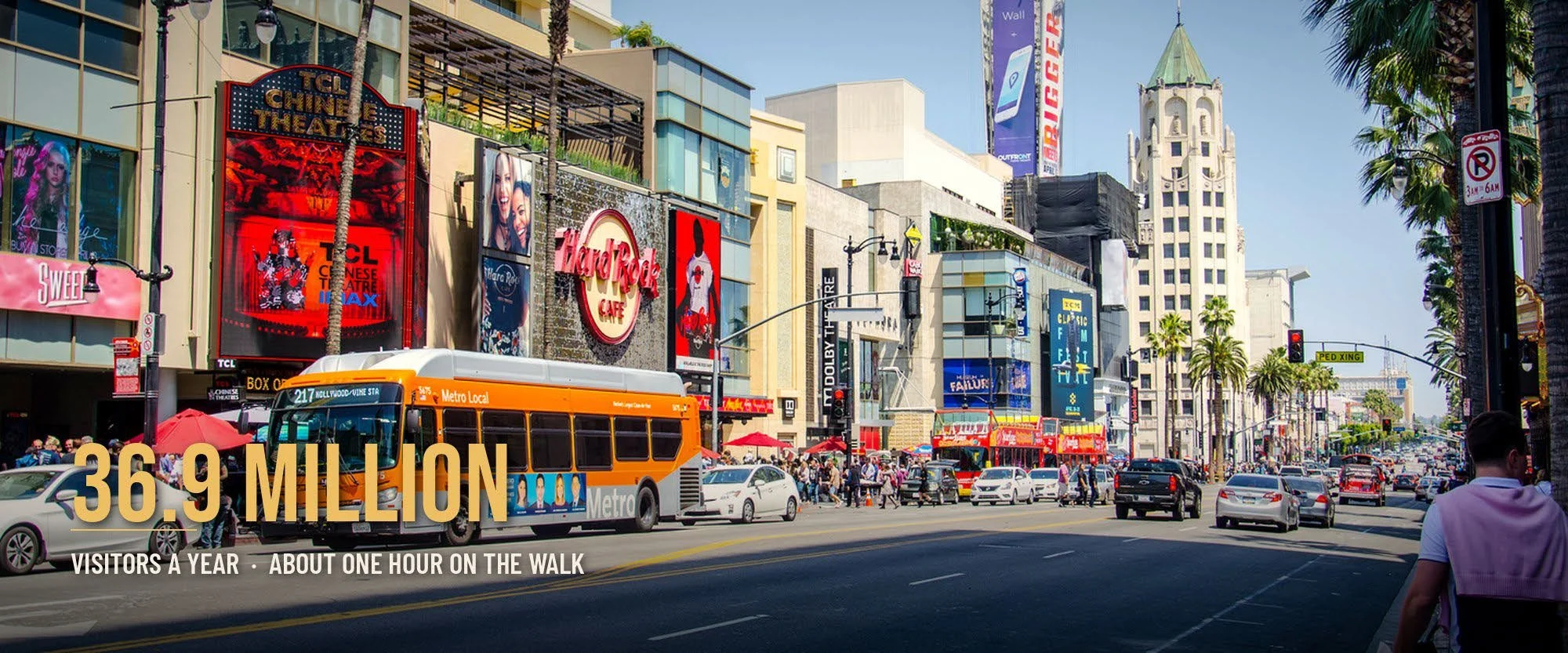
36.9 million people came to the Hollywood Entertainment District last year.
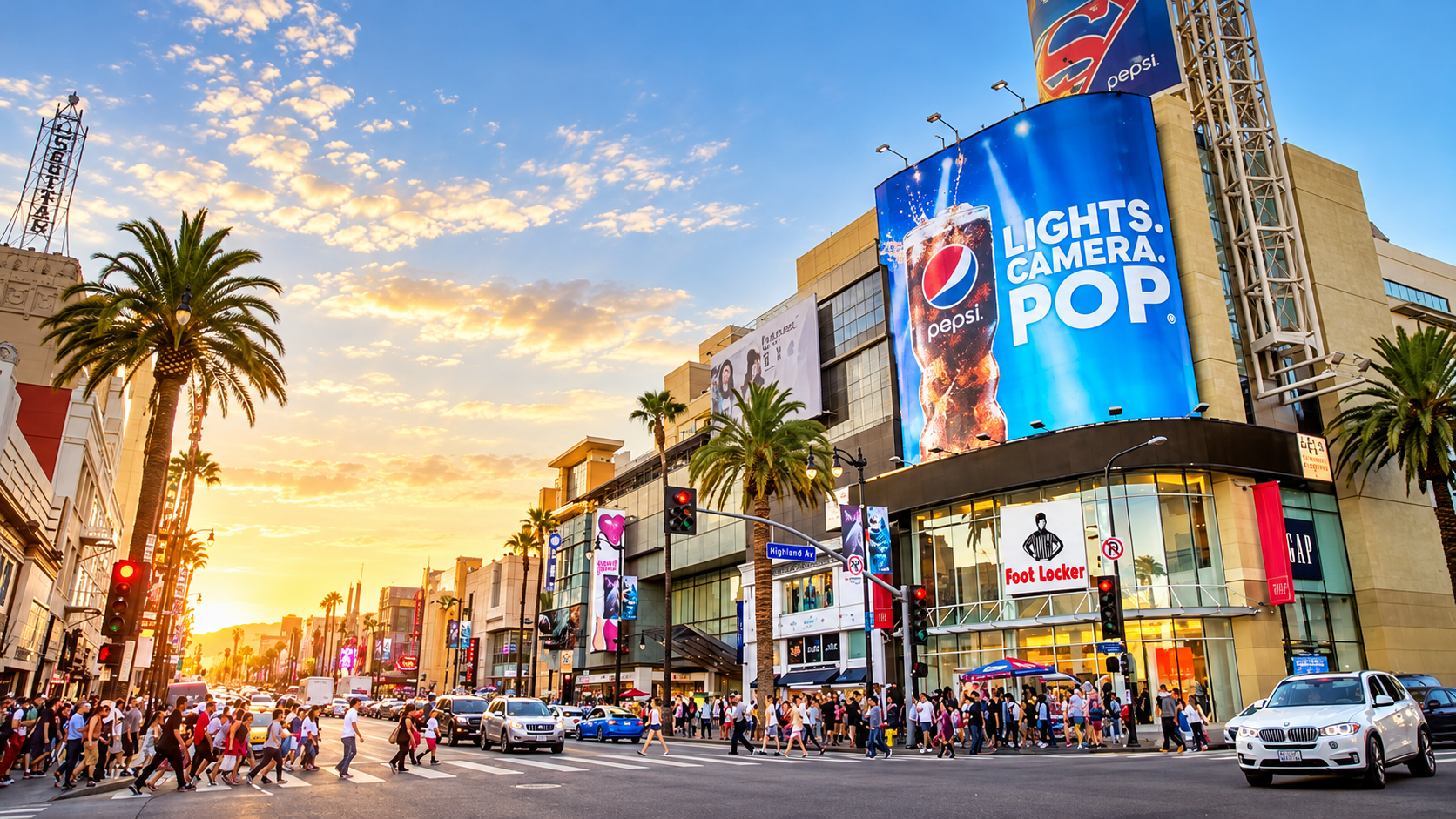
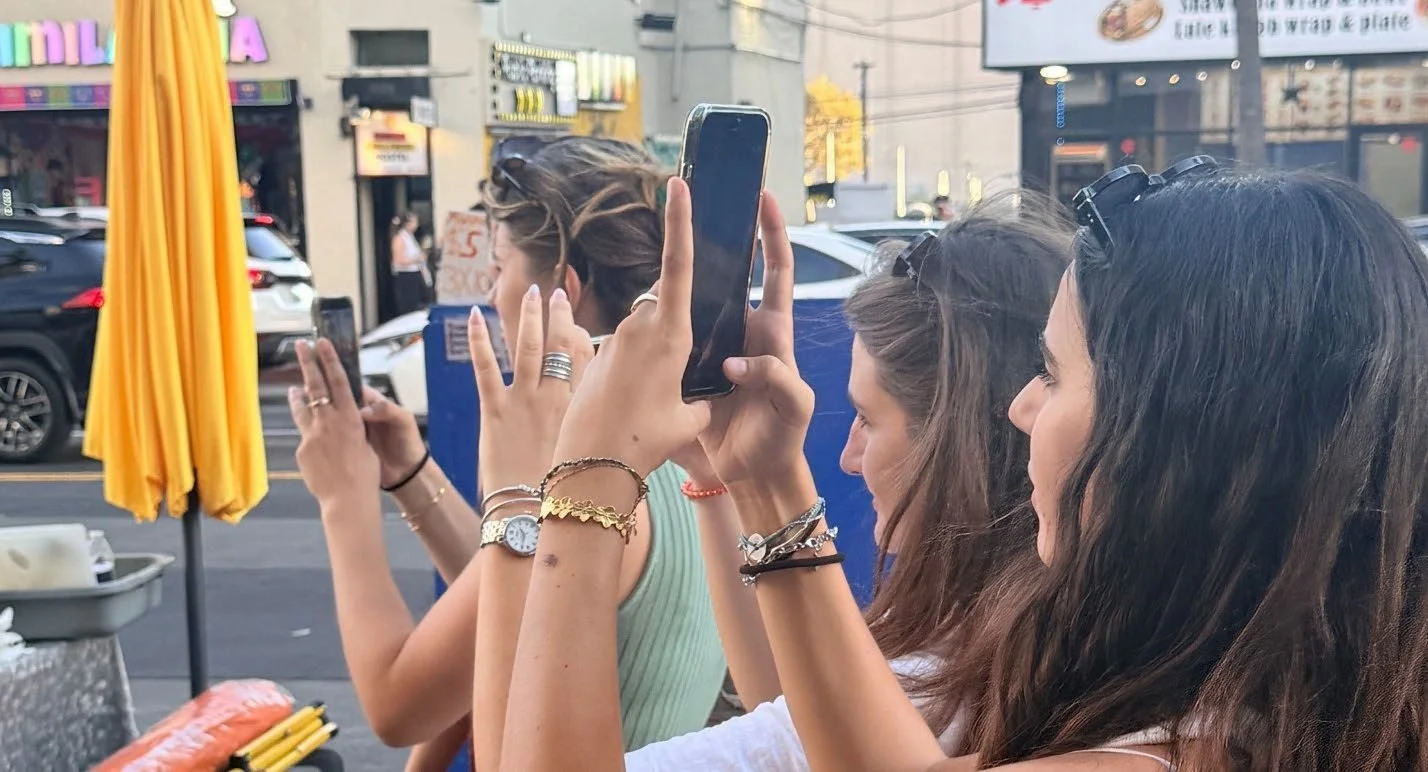
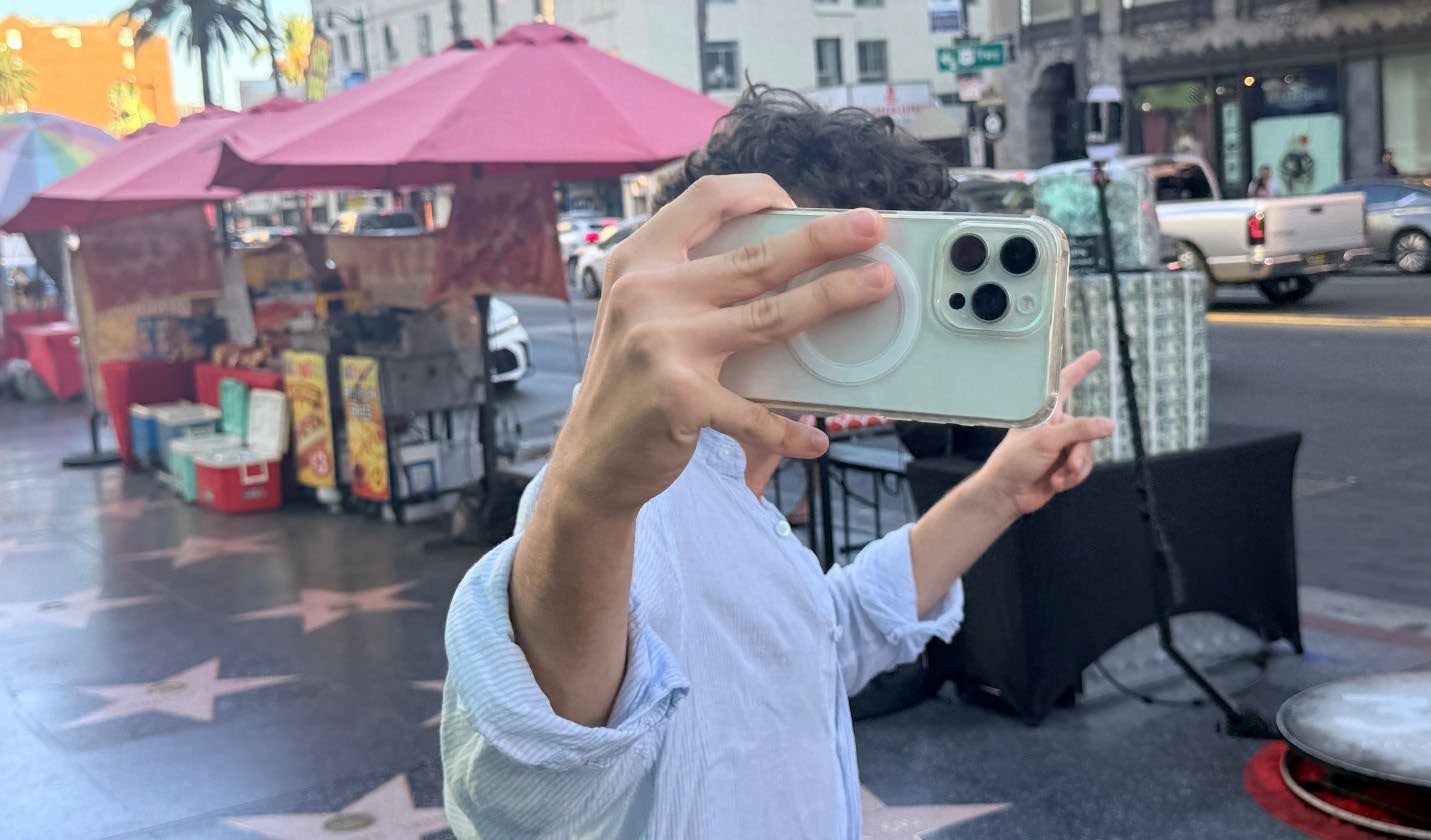
Walking the Walk of Fame recently, between the souvenir racks and the brass stars, I watched sellers livestreaming products to TikTok Shop from the sidewalk. No storefront. No buildout. A phone, a light, and the most recognizable backdrop on earth behind them. Nobody sold them the location. They worked out the arbitrage before the real estate industry did.
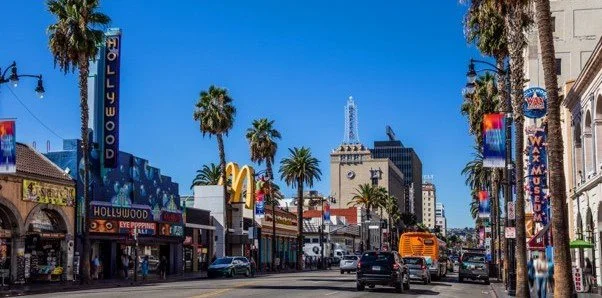
Walk the Walk of Fame from Orange Drive to Vine and count the storefronts, as I did: 26 souvenir shops, 8 smoke shops, 6 tattoo parlors, and 35 vacancies. The most photographed street on earth is running a retail model that stopped evolving before the smartphone existed. The average visit to the Walk lasts about an hour, people take their pictures and spend their afternoon somewhere else. That is a supply problem, not a demand problem.
I’ve lived and worked in this submarket for two decades, first in entertainment and now in commercial real estate. The gap between the volume of people here and the quality of what’s sold to them has been the most obvious mispricing in Los Angeles retail. What’s different now is that the city and the market has started to move on it.
Hollywood has turned the corner
In the six months through Q1 2026, the Hollywood Entertainment District absorbed more than 150,000 square feet of new leases, net retail absorption swung positive, and pedestrian traffic beat the prior year every month. District retail vacancy has tightened to 6.8%.
And the money being invested in Hollywood is a serious recognition of its long-term value. Tinder co-founders Justin and Tyler Mateen paid $69 million for the Hollywood Galaxy and the Petersen Building beside the TCL Chinese Theatre. Sony and Alamo Drafthouse are restoring the Cinerama Dome and the former ArcLight. Bathhouse signed a 25-year lease for 55,000 square feet at the old Amoeba Music building, and Philadelphia’s Fitler Club has backfilled 93,000 square feet for a flagship at Columbia Square. Spotify opened Spotify Sycamore Studios, a Hollywood video podcast studio for its partner creators, and Skims took 116,000 square feet of office space on a lease through 2038.
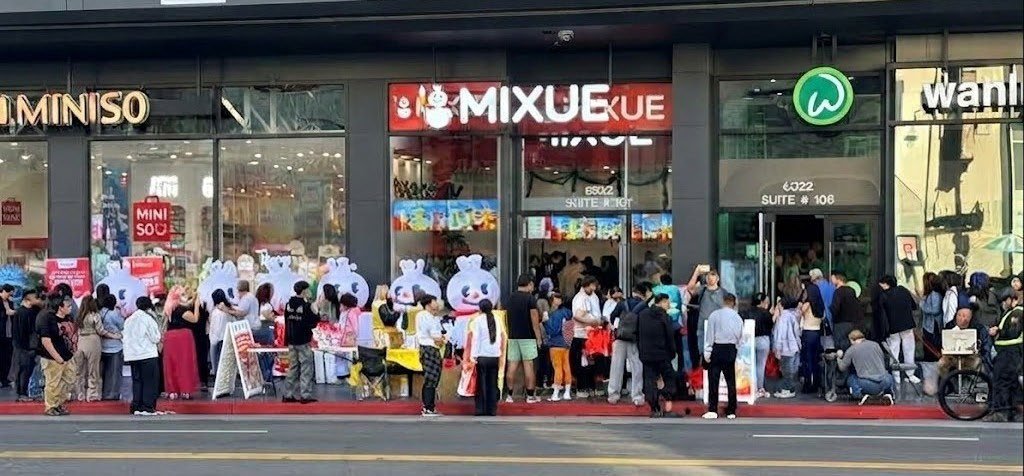
And on the Walk of Fame itself, operators from around the world are establishing flagship stores. China’s Mixue, the world’s largest chain by store count, with more than 53,000 locations, chose the Walk of Fame for its first U.S. location. Mexico’s Farmacias Similares, a Latin American pharmacy with more than 10,500 locations across Mexico, Colombia and Chile, opened its first U.S. store. Regen Acai a new concept from the founders of Canada’s Heal Wellness, which now runs 51 locations with 157 more in development. Cotti Coffee, founded in 2022 by former Luckin executives, with more than 18,000 stores across 33 countries is in buildout on the same stretch, and Australia’s Hokey Pokey Ice Cream has taken a position nearby. Baskin-Robbins too has recently secured space for its flagship, and in March, Raising Cane’s opened its 1,000th restaurant beside the TCL Chinese Theatre. I worked on several of these deals myself, including Similandia, Regen and Baskin-Robbins
The public realm is moving too. The Gensler-designed Heart of Hollywood master plan is now advancing as Access to Hollywood, with protected bike lanes already open and bus lanes, widened sidewalks and streetscape improvements to follow along the Walk of Fame. And just this past month, Assembly Bill 1679 was passed by legislature in Los Angeles to establish a faster and more flexible permit and approval process for small businesses and pop-ups.
That is not civic optimism. That is committed capital being invested into the long-term value of Hollywood.
Why They’re Choosing Hollywood
No other street offers this much global exposure for the cost of rent. Retail rents in the Hollywood core average about $3.15 a square foot a month, and even the most trafficked corners command upwards of $11sf ($132 a year), against an average near $710 a foot across Manhattan’s prime retail corridors. Times Square sells advertising; Hollywood sells entertainment itself. The Oscars broadcast from this block. Studios premiere their biggest films here. And 36.9 million visitors arrive from every country on earth, film the street, and carry it home in their feeds. That’s free marketing.
For a century, Hollywood Boulevard has been where the world comes to see its stars. That hasn’t changed. What has changed is who the stars are, and how the world shops.
1. Who the stars are has changed.
Creators aren’t a parallel industry anymore; they’re the main one. According to Google and Kantar’s Future of Video survey, 83% of Gen Z YouTube viewers said they prefer watching their favorite creators over studio-produced shows. YouTubers Mark “Markiplier” Fischbach, Curry Barker and Kane Parsons created some of the year’s most profitable films. When Fox launched Fox Creator Studios in January, its entertainment CEO called creators “today’s production companies, storytellers, and superstars.” Disney gave Dhar Mann Studios a 20-episode order, and when it wanted Gracie’s Corner, a family-made YouTube series with nearly 10 billion views, it acquired the global rights. The studio didn’t develop the hit. It found an audience that already existed and bought its way in.
Even the talk show Hollywood invented and then abandoned has come back as a creator business. 58% of Americans aged 12 and older now consume a podcast every month; 167 million people, an all-time high. YouTube is now the platform weekly podcast consumers choose most often, having overtaken Spotify as video consumption expanded beyond audio. Netflix now streams video podcasts from Spotify Studios and The Ringer, and 21% of podcast fans have already attended a live show. The demand for a seat in the room exists. The seats mostly don’t.
Creators are becoming brands, too. Feastables and Chamberlain Coffee sit on the same shelves as legacy brands, and creators like Courtney Shields (DIBS Beauty) and MJ Carlson (Electric Picks) have built companies of their own. And as the stars became brands themselves, the way people shop changed.
2. How people shop has changed.
The platforms that changed how we consume entertainment also brought the shopping mall with them. TikTok Shop, Instagram Shop, YouTube Shopping and Amazon Live turned the feed into a checkout counter. U.S. social commerce reached $87.02 billion in 2025, up 21.5%, and is expected to clear $100 billion for the first time in 2026. TikTok Shop alone did $15.82 billion in U.S. sales last year, up 108%, and now accounting for nearly 20% of U.S. social commerce. Discovery, engagement and checkout merged into a single scroll.
The Future of Video study further revealed that 74% of Gen Z viewers say creators give them the confidence to buy. And the traffic now runs both ways: on September 19, Sephora launched on TikTok Shop with monthly drops unveiled on TikTok Live. Yet as Glossy noted, Sephora still has to give people a reason to walk into its stores. Whether it’s foot traffic in a store or a spot in the feed, every player in this economy is fighting for the audience’s attention.
Growing Pains: Why Digital Brands Are Going Physical
The move to online shopping created a boom, and with it, immense competition. Now the cost of being online-only is rising fast. The four players that make this economy work, the platforms, the creators, the brands, and the agencies that connect them, are all working against the same four problems.
The cost of attention
Online customer acquisition costs (CAC) have risen roughly 60% over five years. Creators work harder for the same reach, agencies have to justify rising budgets, and platforms are paying to win creators from each other. TikTok now offers U.S. creators up to 90% of subscription earnings to keep them from defecting. Everyone is paying more for the same eyeballs, and all compete for space in the same feed.
Trust
At the same time, feeds are filling with AI-generated slop. In Epidemic Sound's 2026 survey of 3,000 creators, 75% said human-made content is now a premium. Brands face deepfake risk, agencies sell a human product that AI undercuts on price, and platforms fight to keep their feeds worth watching.
Renting reach
Every player is building on land they don’t own. One algorithm change can cut a creator’s income overnight, and the brand’s and agency’s with it. Even the platforms felt it this year: when TikTok’s U.S. business moved into a new joint venture in January, creators reported their analytics vanishing.
Fragmentation
Audiences are scattered and their attention spans are limited. Serious creators now publish across several platforms at once, so brands and agencies chase one audience through five feeds while the platforms fight over the same people. Nobody gets the whole room — because there is no room.
So the Smartest Brands are Building the Room.
Digital-native brands, and the agencies behind them, have stopped treating stores as overhead and started treating them as media. As Vivaldi puts it, the play is to "turn physical stores into media channels, amplifying the brand far beyond their square footage." Groupe Dynamite's new Garage flagship in Manhattan is purpose-built as a content-creation hub. Glossier’s three flagships are designed so customers produce the brand’s marketing simply by visiting with their phones. Closer to home, Outlandish, a certified TikTok Shop partner, opened on Santa Monica's Third Street Promenade with livestream booths and shoppable inventory: a store, a studio and a distribution channel on a single lease.
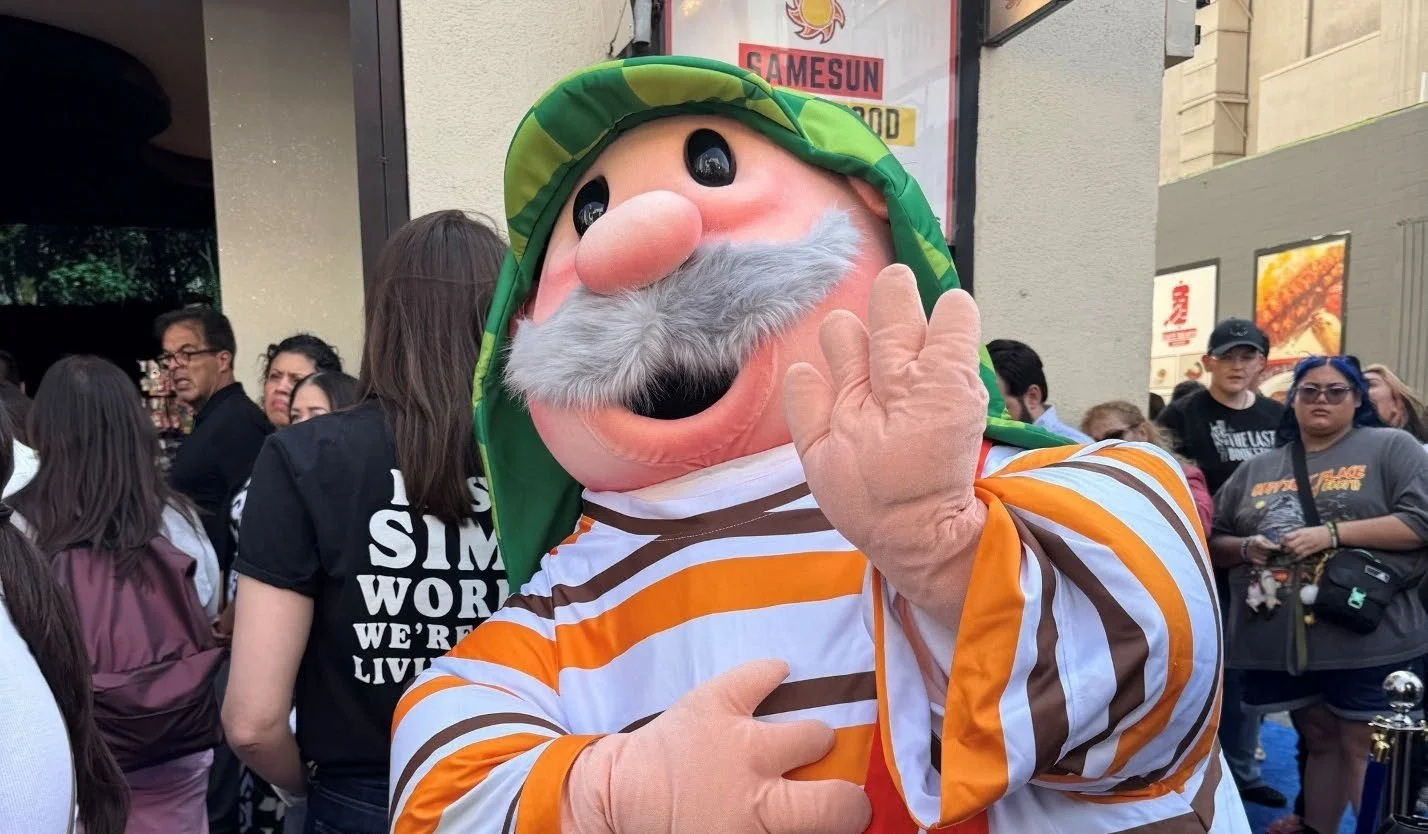
You can already see it on the Walk of Fame, too. Farmacias Similares, Latin America's largest pharmacy chain, opened its first U.S. store, Similandia, in September 2025. FDA rules bar it from selling the generic medicines that built the company, so it built something else: a 1,500-square-foot cultural playground around Dr. Simi, the dancing mascot whose plush dolls are a phenomenon across Latin America. Merchandise, games and dance challenges inside; a costumed Dr. Simi outside, pulling in a crowd. Everyone goes home with user-generated content that continues to live and advertise in people’s feeds.
A store is no longer a place where you sell inventory. It's a place where you manufacture content, at an acquisition cost the platforms can't touch.
Hollywood 2.0 – The Creator Economy Belongs in Hollywood
Put these shifts on a map and they converge at the intersection Hollywood was built to own: entertainment and consumer culture.
Which leads to my case for a Hollywood 2.0. Storefronts on the world’s most famous street become stages where creators are celebrated and recognized as the new stars of Hollywood: glass-fronted studios where live shows and podcasts are filmed in front of a sidewalk full of fans, flagships where brands launch products and exclusive merchandise drops on camera, and rooms where creators finally meet their audiences in person. The tourists film the creator, the creator films the tourists, and everyone leaves with content. The sellers on the sidewalk already figured this out. The storefronts behind them haven’t. And a single corner can stack: an agency-run livestream studio, a rotating brand flagship, a creator residency, a podcast stage with a live audience. Think of NBC’s Studio 1A built for the 21st century.
And it answers all four problems at once. As attention keeps getting more expensive; here it arrives free. AI is flooding the feed; a live moment in front of a real crowd can’t be faked. An algorithm can take away reach overnight, but not an address. And audiences are scattered across platforms, while one moment on the Walk of Fame becomes a TikTok Live, a YouTube video, a podcast episode and a week of Reels. That is not a store lease. It is an ad buy with a door on it.
A Win-Win for All Involved
Platforms: A sponsored stage on the Walk of Fame is a home for your most valued creators: a recruiting tool, a shoot location and permanent earned media on the most photographed street in the world — a stage facing the street, where fans watch their favorite creators live.
Creators: A home on the Boulevard is the one asset no algorithm update can take away — and the first time Hollywood’s physical geography acknowledges who you are and what you do. It is a place where you create the in-person intimate connection with your audience the feed can never offer.
Brands: A flagship here generates content for you, for every creator who books the studio, and for every visitor who films the block — retail margin, production value, earned reach, for less than the cost of a traditional billboard.
Agencies: A live studio on the Walk of Fame turns a cost center into a destination — the streams you already produce, now shot in front of an audience your clients would otherwise pay to reach — and gives you something no one else can pitch: a live activation where 100,000 visitors arrive every day.
Hollywood: The start of its creator era. A new kind of storefront that honors Hollywood’s new stars the way the Walk of Fame honors its legends — and gives visitors a reason to stay longer than the hour they spend today. The Boulevard stops selling the past and begins selling the future.
Let’s talk
Through my seat on The Hollywood Partnership’s Advocacy and Economic Advisory Committee, I work alongside the civic and business leaders repositioning the district — from cleaning streets and programming activations to working with property owners open to turn vacant units into tech-forward storefronts built for creators.
Most corridors need to turn before the crowds come. Hollywood already has the crowds. What it lacks is current programming built for today’s audience.
If you’re a platform, a creator, a brand or an agency building experiential retail, scaling social commerce, or rethinking where you belong, I’d like to hear what you’re working on, where you’re finding success, what the pain points are, and who you want to see Hollywood celebrate in the 21st century. Or bring an hour, and I’ll walk the Boulevard with you.
Joel Mendoza
Commercial Real Estate Advisor
Economic Advisory Committee, The Hollywood Partnership · Former Agent/Producer, Creative Artists Agency
CA DRE #02091159 · Commercial Brokers International, DRE #01523713
Storefront counts along the Walk of Fame between Orange Drive and Vine Street are the author’s own, tallied on foot in September 2026. Other figures are linked to their published sources as of September 2026 and are subject to revision.