
Strengthen The Contract. Protect The Close.
A few years ago I was representing an owner of two adjacent multi-family buildings in Los Angeles. They were looking to sell these buildings, and was looking for representation they were comfortable with trusting. I was able to secure the listing, and inspected the property ahead of time, for any potential issues that may come up during escrow that could potentially stall, delay, or stop the closing.
This property had a few unique qualities about it. First both properties were built pre- WW I, between 1906 and 1912. They were both located in a declared historic district of the city, and they were both fairly original. Sure, there were some updates along the line (replacement of electrical panels, newer roof, etc…), but the wiring was still knob-and-tube, with cloth insulated wiring, and the plumbing still mostly consisted of galvanized pipes. Luckily, title was clean.
The owner, through our advise, decided to price the properties aggressively, looking for one buyer for both properties, and surety of closing as the priority over pricing. Since they were priced pretty aggressive (below market), the listings generated a lot of interest and multiple offers.
One that stood out, was from an investor who offered all cash, no due diligence, with funds immediately hard and released to seller and a very short closing window. Makes the terms sound pretty good right. But this is a common tactic among many buyers (stating all cash, but getting a loan during the escrow period), no contingencies (but that may not necessarily be true), and worries from the seller that the buyer will just tie-up the property and try to retrade on price once they have the property tied up.
You may say how can they do that? Isn’t their offer non-contingent upon inspections. In writing it was, but in many states, there are legally mandated contingencies that don’t even start until delivery of some items, or timelines do not get triggered until another event happens. Also, depending on the purchase and sale agreement (“PSA”), the contingencies may have to be removed in writing and waived explicitly, or there is often “hidden” language in the PSA such as: “subject to review”, or side letters or email carve-outs not in the main contract.
Also, the Earnest Money Deposit (“EMD”) can tell you if it truly is a non-contingent offer. A real non-contingent offer should come with meaningful skin in the game, and many times it is only a “token” amount, almost a placeholder, ie: if the EMD is only a few thousand dollars, a buyer may be willing to walk away from that if they can’t renegotiate a better price, but if it is a few hundred thousand dollars, they are more likely to take the contingency, or lack thereof, more serious.
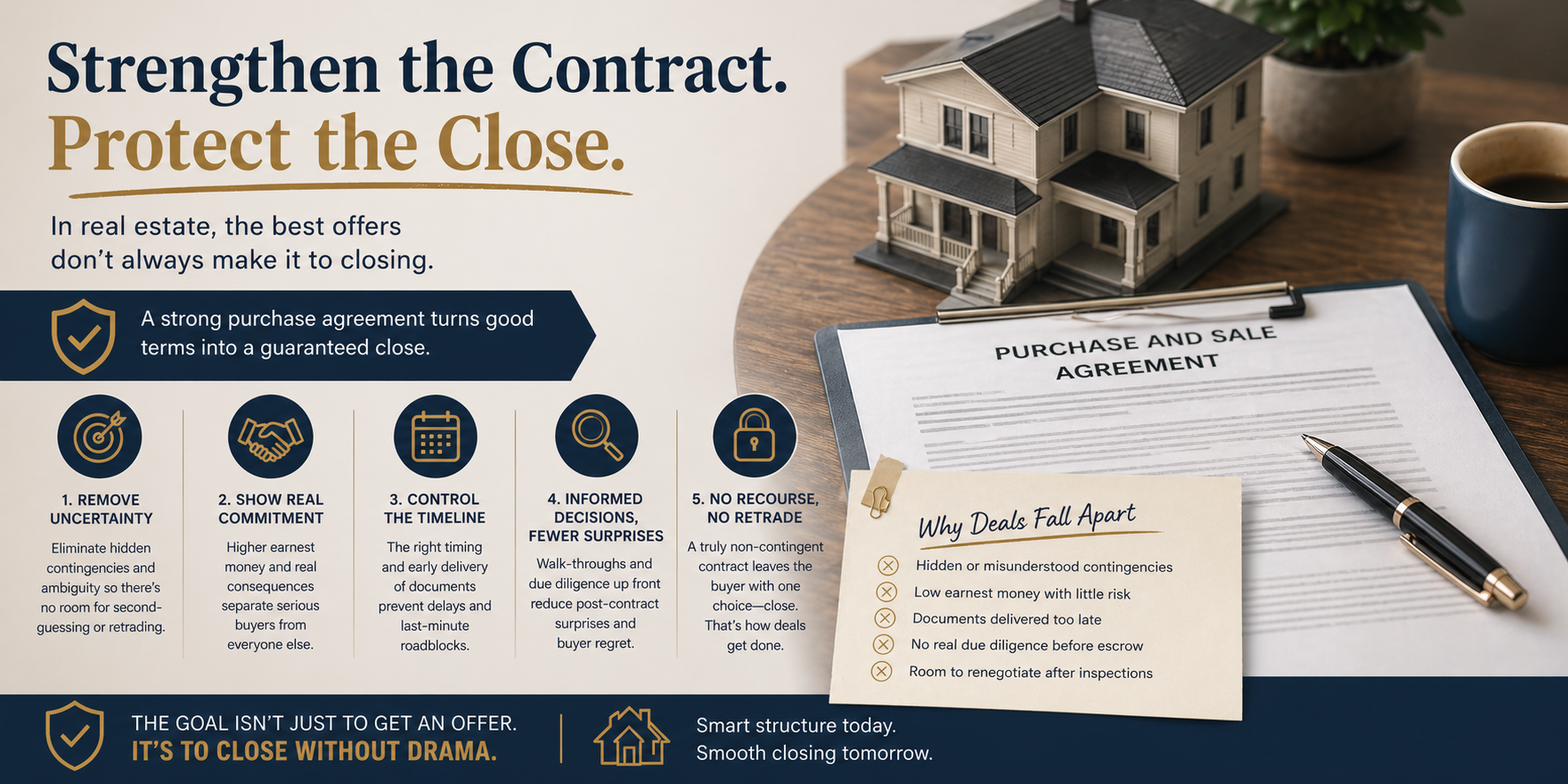
To protect our client, the seller, we made sure to strengthen the terms of the PSA. We changed the contingency language from active removal to passive, we increased the EMD, we increased the closing timeframe and days to make sure the third party vendors could accommodate a fast closing (title/escrow), we made sure to deliver all the seller’s due diligence deliverables prior to the PSA execution (taking away certain automatic three day rights to cancel by local law), and we insisted the buyer conduct a walk-thru inspection with his vendors prior to opening escrow, and we had the buyer sign a release that he did and/or had the opportunity to do so. By taking these extra steps we were able to ensure the PSA was truly non-contingent and the buyer had no recourse but to close escrow.
We did close escrow, but not without some problems. Even though the buyer conducted a walk-thru with his general contractor, inspector, and an electrician, we had an issue with the insurance company, they wouldn’t insure the property unless the electrical was upgraded, or a contract with a contractor was signed to upgrade the electrical. Even though the buyer knew that the electrical needed to be updated, he hadn’t planned to do this immediately upon the close of escrow, and tried to reduce the price of the property due to this.
Fortunately, by buttoning up the PSA we were able to avoid any price reduction. The buyer realized that they had no argument and that if they did not close escrow, they would lose a substantial EMD. After a week delay discussing this with the buyer, he moved forward with the purchase under his attorney’s advice. My client was happy to avoid the drama of a retrade and more importantly the close of the transaction.
If you’re wondering how to avoid these and other closing road-bumps, make sure you hire an agent with experience and knowledge on how to best protect you, and ensure that an offer presented is exactly what is accepted (without hidden clauses, or outs), or you can always reach out to me for a quick consultation call.