
Why a Higher Cap Rate Is Not Automatically Better
By George Pino, CEO of Commercial Brokers International
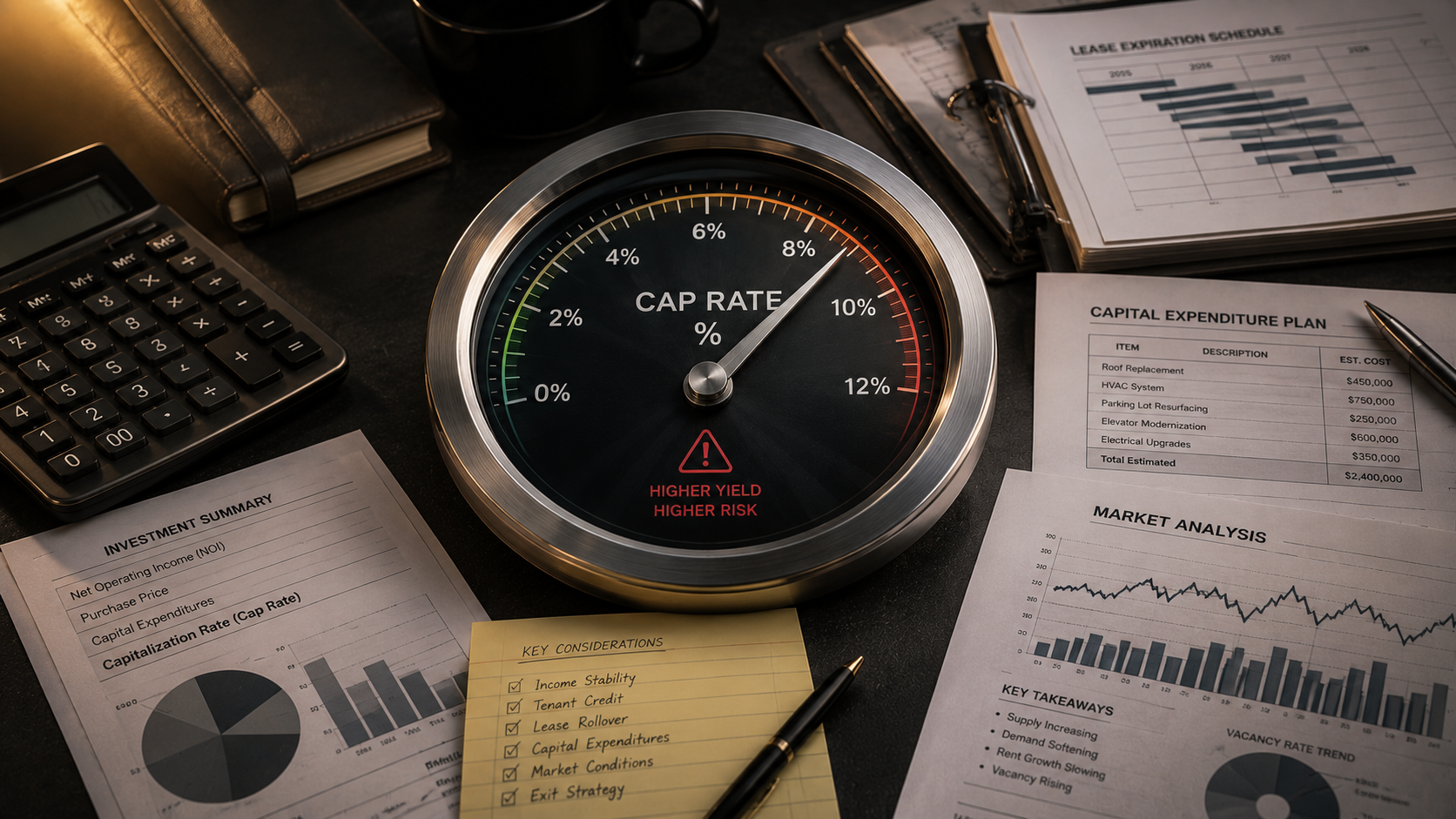
One of the most common misconceptions in commercial real estate is that a higher capitalization rate—or cap rate—automatically means a better investment.
At first glance, the logic seems straightforward: If Property A offers a 9% cap rate and Property B offers a 5% cap rate, why wouldn't an investor choose the 9% property?
Because cap rate is a measure of yield, not a measure of quality or risk.
In fact, as is true for any type of investment, the returns are weighed against the risk (risk vs. reward), and many times a higher return doesn’t take into account how much greater the risk may be.
Understanding Cap Rates
To understand this, we need to understand Cap Rates.
A cap rate is generally calculated by dividing a property's Net Operating Income (NOI) by its purchase price:
Cap Rate = NOI ÷ Purchase Price
The calculation is simple. Understanding why a property has a particular cap rate is much more important.

Higher Cap Rates Usually Come With Higher Risk
A property trading at a 9% cap rate may appear inexpensive compared with a similar property trading at 5%. But the higher yield may be the market's way of compensating the buyer for additional risk.
For example, the 9% property might have:
Declining NOI
Significant upcoming capital expenditures
Short-term leases and substantial rollover
Weak tenant credit
An inferior location
Functional obsolescence
High vacancy or collection problems
Above-market in-place rents that are unlikely to renew
Environmental or physical issues
A large amount of deferred maintenance
Limited future appreciation potential
Declining demographics, which may impact future rents
In other words, the higher cap rate is more likely to be a warning, not a bargain.
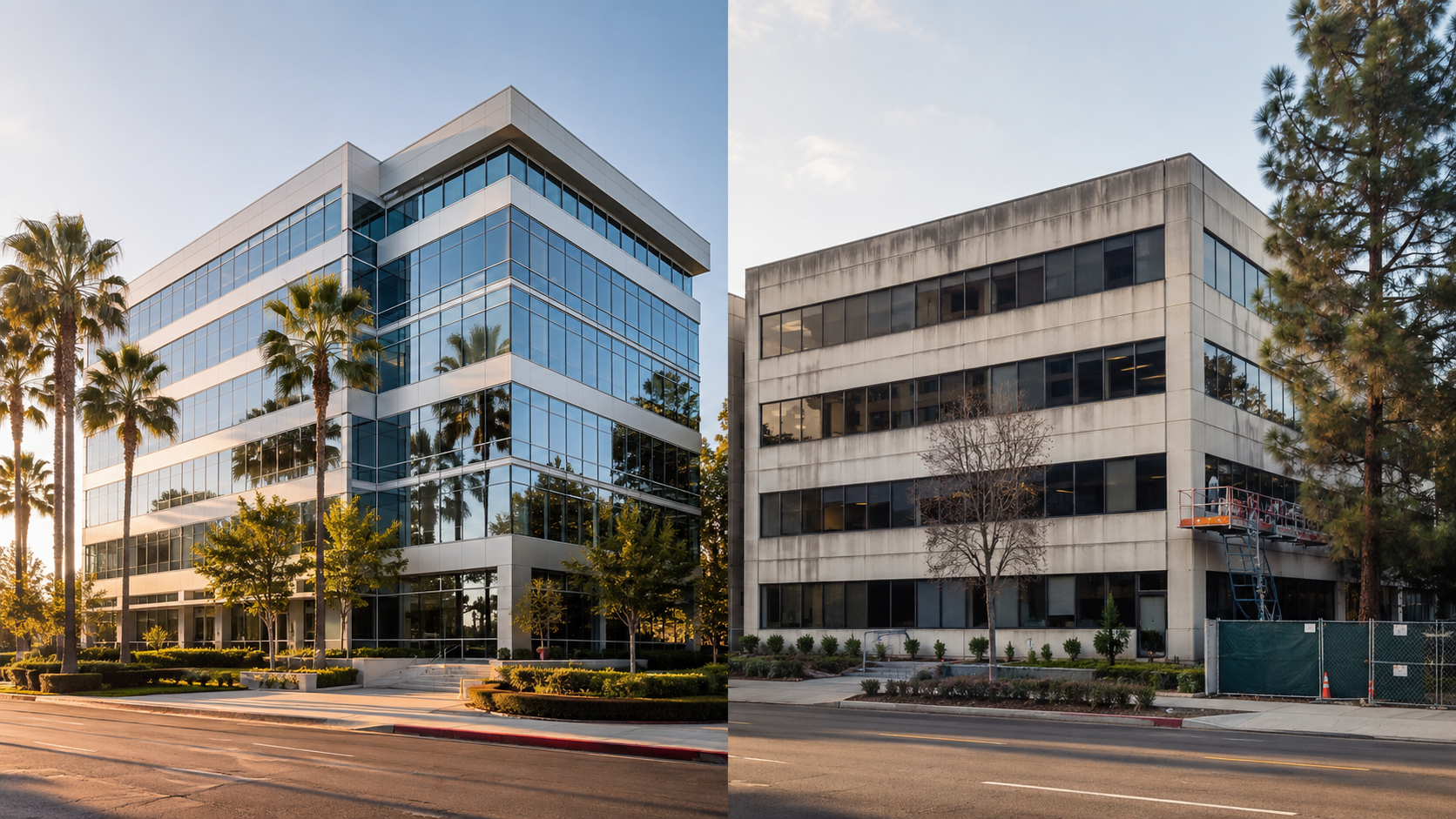
Consider Two Properties
Imagine two office buildings with identical $1 million annual NOI.
Property A
Purchase price: $20 million
NOI: $1 million
Cap rate: 5%
Property B
Purchase price: $11.1 million
NOI: $1 million
Cap rate: 9%
Property B looks dramatically more attractive based solely on the cap rate.
But suppose Property B needs $3 million of immediate capital improvements, has several major tenants whose leases expire within two years, and is located in a submarket experiencing declining demand.
Suddenly, that 9% cap rate doesn't look quite as attractive.
Meanwhile, Property A might have investment-grade tenants, long-term leases, strong rent growth, minimal capital requirements, and a highly desirable location.
Here is where most first time investors get it wrong:
The investor isn't simply buying today's NOI. The investor is buying the future stream of income, risk, and potential value associated with the property.
The Real Question Isn't "What's the Cap Rate?"
A better question is:
"Why is the cap rate this high?"
That question can uncover the real investment story.
A high cap rate created by temporary vacancy or poor management may represent an opportunity. A high cap rate caused by structural problems, declining demand, or significant capital requirements may represent a value trap.
Likewise, a low cap rate isn't necessarily bad. Investors may accept a lower initial yield because they believe the property offers exceptional tenant credit, long-term income stability, strong rent growth, limited supply, superior location, or significant appreciation potential.

Look Beyond the Going-In Cap Rate
Sophisticated investors evaluate the entire investment—not just the initial yield.
They consider:
Going-in cap rate – What is the initial yield based on today's NOI?
NOI growth – Is income expected to increase or decline?
Capital expenditures – How much money will the property require?
Lease rollover – How much income is at risk?
Tenant credit – How reliable is the income?
Market fundamentals – Is demand strengthening or weakening?
Exit cap rate – What might the property be worth when it is sold?
Leveraged returns – How does financing affect equity returns and risk?

The Bottom Line
Cap rate is an important tool, but it should never be used in isolation, or be the sole determination of the value of the investment.
A 9% cap rate isn't necessarily better than a 5% cap rate. It simply means the market is pricing the property differently—and there is likely to be a very good reason why.
The best CRE investors don't ask:
"Which property has the highest cap rate?"
They ask:
"What am I being compensated for, and is that compensation enough for the risk I'm taking?"
That shift—from chasing yield to understanding risk-adjusted yield—is one of the most important steps in becoming a more sophisticated commercial real estate investor.
Considering a Commercial Real Estate Investment?
If you’re considering investing in commercial real estate, we welcome an advisory call to determine what types of properties and returns best fit your investment goals.
You can reach us at info@cbicommercial.com.